
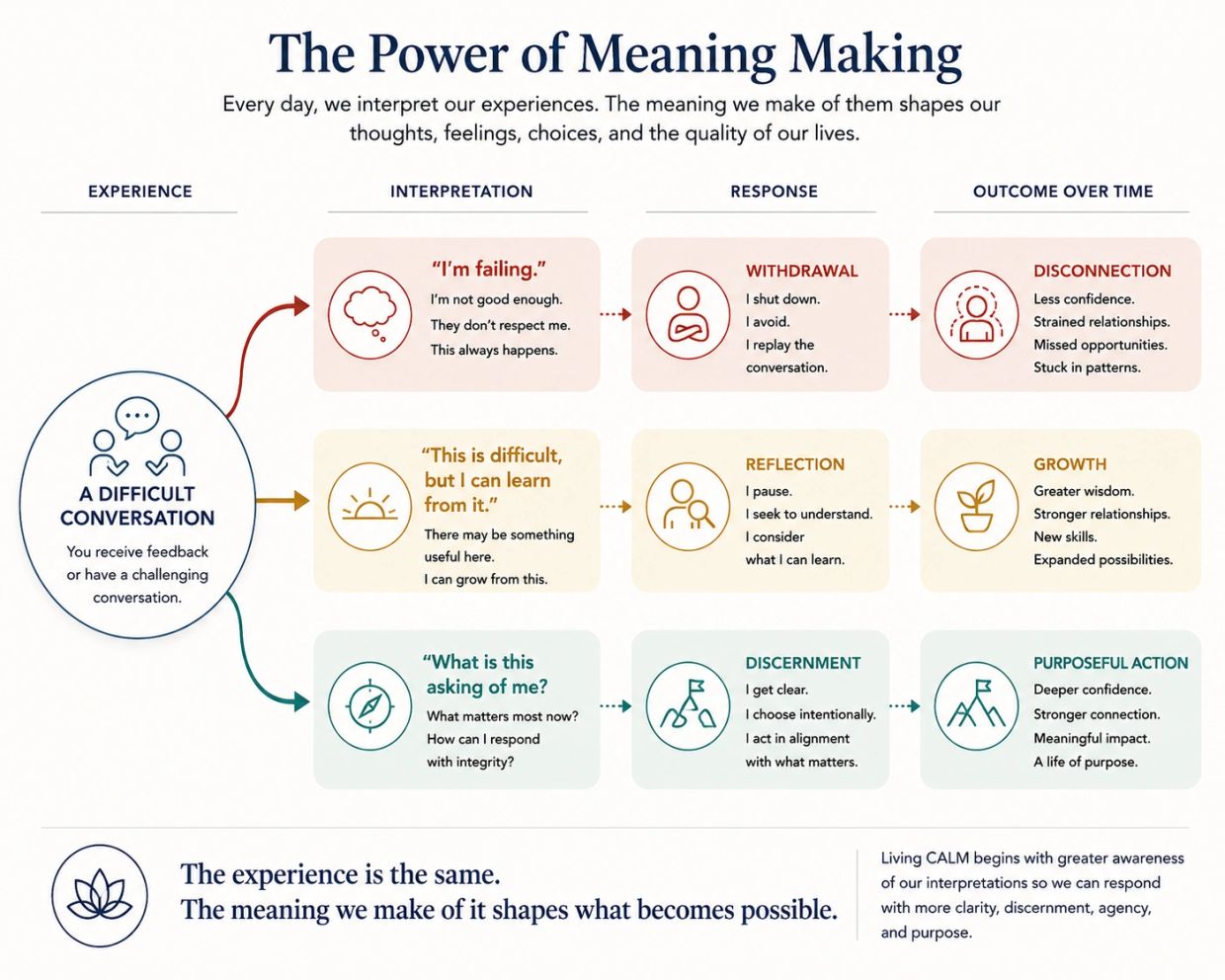
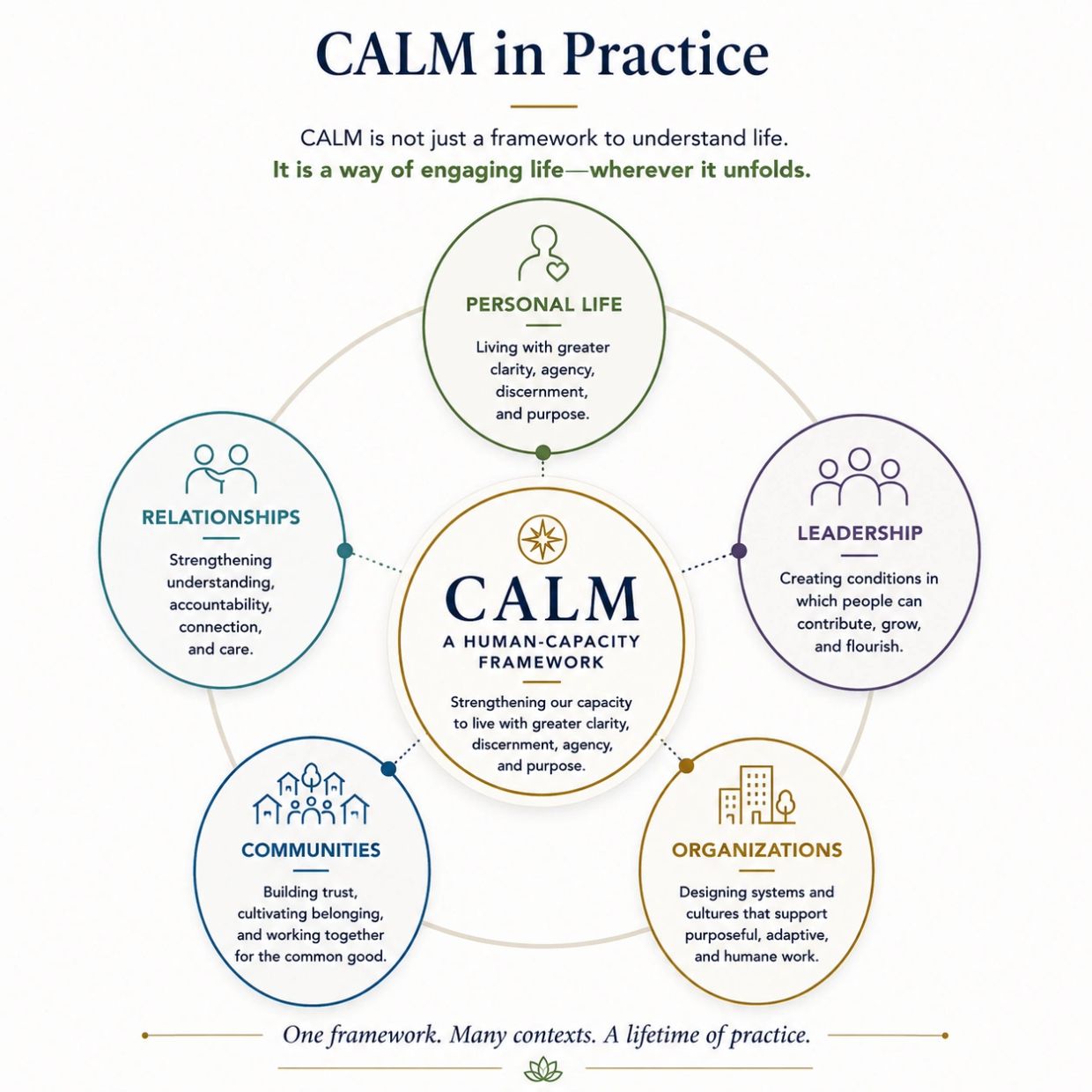
The capacities of Clarity, Reflective Legitimacy, Agency Within Constraints, and Meaningful Action do not emerge all at once. They develop gradually through repeated attention to how we interpret our experiences, engage our relationships, respond to challenges, and make choices in everyday life.
Growth often begins with understanding. We become more aware of what is happening within and around us. Through reflection, we examine our assumptions, consider what matters most, and explore possible paths forward. Reflection creates space for intentional choice. Choice shapes action. Action generates new experiences that invite learning, insight, and continued growth.
Over time, these practices strengthen our capacity to navigate uncertainty with greater clarity, respond to challenges with greater discernment, and pursue meaningful goals with greater purpose. What begins as a conscious effort gradually becomes a way of engaging with life.
This process is rarely linear. We revisit familiar questions, encounter new circumstances, and continue learning throughout our lives. Each cycle deepens understanding, strengthens capacity, and expands our ability to respond thoughtfully to the opportunities and responsibilities before us.
Wherever you begin, the invitation is the same: start where you are.
Small, consistent practices—thoughtful questions, honest reflection, meaningful choices, and intentional action—can gradually reshape how you experience your life, how you relate to others, and how you contribute to the world around you.

What it is
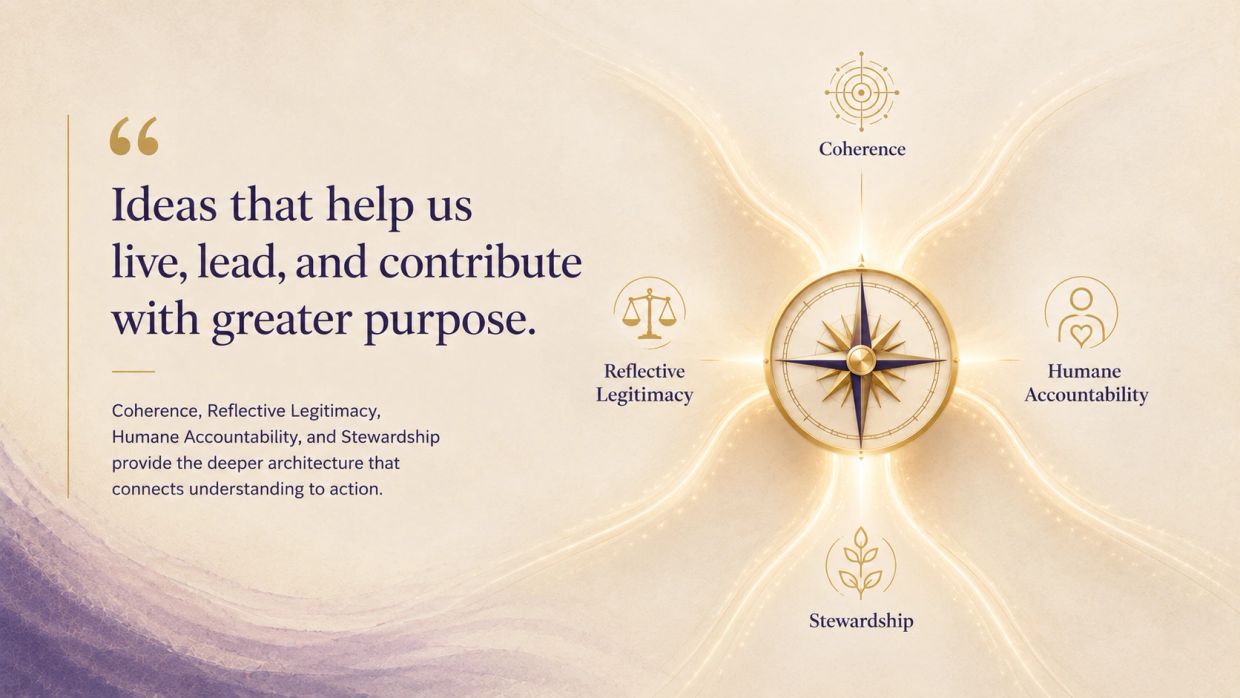
Coherence is the alignment of understanding, values, choices, and actions. When identity, judgment, and behavior work together, people are better able to navigate uncertainty, make thoughtful decisions, and pursue meaningful goals with integrity and purpose.
Coherence does not require perfection, certainty, or complete control. It emerges when we make sense of our experiences, remain connected to what matters most, and act in ways that align with our values, responsibilities, and aspirations.
Why it matters
When our understanding, values, and actions become disconnected, we often experience confusion, frustration, and diminished effectiveness. Coherence helps us remain grounded amid change, strengthen trust in ourselves and others, and pursue meaningful goals with greater clarity, consistency, and purpose.
What it is
Reflective legitimacy is the practice of evaluating choices against values, principles, responsibilities, and purpose. It invites us to consider not only what is possible, but what is appropriate, ethical, and aligned with who we aspire to be.
Why it matters
Many decisions can be justified by expediency, authority, or immediate results. Reflective Legitimacy encourages deeper reflection about whether our choices are worthy of trust, aligned with our commitments, and consistent with the kind of people and institutions we seek to become. It helps strengthen integrity, stewardship, and coherence between intention and action.
What it is
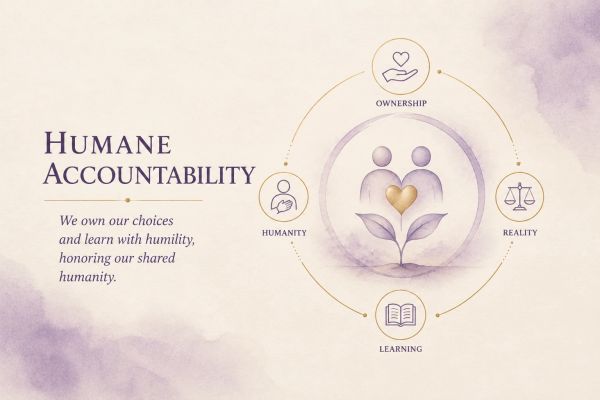
Humane accountability recognizes that people are responsible for their choices while also acknowledging the realities and constraints that shape those choices. It encourages ownership, learning, and growth while preserving dignity, compassion, and humanity.
Why it matters
Accountability often becomes distorted by blame, shame, or punishment. Humane accountability creates space for responsibility without dehumanization. It helps individuals and organizations learn from experience, address challenges honestly, and pursue improvement while maintaining respect for the people involved.
What it is
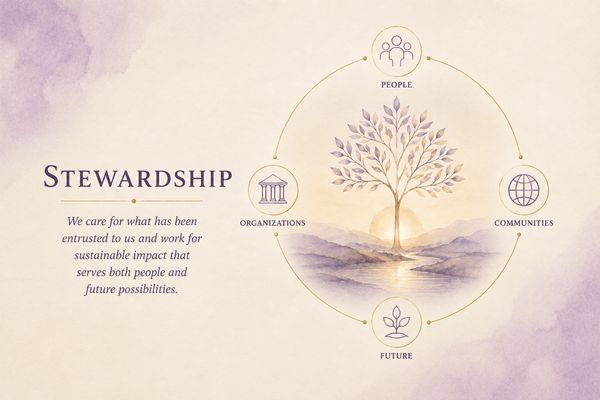
Stewardship calls us to care for what has been entrusted to us, whether that involves relationships, organizations, communities, resources, or opportunities. Sustainable effectiveness focuses on creating meaningful results in ways that can be maintained over time without sacrificing well-being, integrity, or human flourishing.
Why it matters
Short-term success can come at the expense of people, relationships, and future possibilities. Stewardship encourages a broader perspective that considers long-term consequences and shared responsibility. Sustainable effectiveness helps ensure that achievement and human flourishing remain mutually reinforcing rather than competing priorities.